Here are the entities that ultimately decide how each of Maine’s opioid settlement shares are spent:
50% Maine Recovery Fund share:
30% local share: decisionmakers for towns, cities, and counties
20% state share:
Unclear. Maine’s Memoranda of Understanding simply provide that this share is distributed “to the State of Maine Attorney General.”[1]
This share must be spent on the uses described in the national settlement agreement’s (non-exhaustive) Exhibit E,[2] which includes prevention, harm reduction, treatment, recovery, and other strategies.[3]
State Attorney General decides. The Maine Attorney General will decide how this 20% share will be spent on approved uses.[4]
No, supplantation is discouraged but not prohibited. Maine does not explicitly prohibit supplantation uses of its funds from the 20% state share. This means that the state share may be spent in ways that replace (or “supplant”) — rather than supplement — existing resources.
However, Maine’s 2023 settlement MOU, which applies to settlements reached after those with Distributors and Janssen (Johnson & Johnson), does “strongly encourage[]” the state, localities, and the Maine Recovery Council to use settlement funds “solely to supplement and strengthen, rather than supplant, resources for … approved uses.”[5]
No (neither public nor intrastate reporting required). Opioid settlement expenditures are not officially published in a centralized location for this share.
Visit OpioidSettlementTracker.com’s for an updated collection of states’ and localities’ available expenditure reports.
Not applicable.
Amendment to Maine State-Subdivision Memorandum of Understanding and Agreement Regarding Use of Settlement Funds, ; Memorandum of Understanding and Agreement Regarding Use of Settlement Funds-2023, . ↑
Amendment to Maine State-Subdivision Memorandum of Understanding and Agreement Regarding Use of Settlement Funds, Secs. (defining “Approved Uses” to mean the national settlement agreements’ Exhibit E), (requiring “[a]ll Opioid Funds, regardless of allocation,” to be spent on “Approved Uses”); Memorandum of Understanding and Agreement Regarding Use of Settlement Funds-2023, Secs. , (same). See also Distributor Settlement Agreement, Sec. (“Exhibit E provides a non-exhaustive list of expenditures that qualify as being paid for Opioid Remediation. Qualifying expenditures may include reasonable related administrative expenses”). Maine’s MOUs do not address administrative or attorneys’ fee uses for the state share but do address Recovery Fund and local set-asides for those purposes. ↑
This share is distributed directly to Maine counties, cities, and towns according to of the MOUs.[1]
With limited exceptions,[2] this share must be spent on the uses described in the national settlement agreement’s (non-exhaustive) ,[3] which includes prevention, harm reduction, treatment, recovery, and other strategies.[4]
Localities decide autonomously. Decisionmakers for the counties, cities, and towns will ultimately decide for themselves how to spend their monies on Exhibit E uses,[5] whether directly or in collaboration with federal, state, local, tribal, or private sector groups.[6]
No, supplantation is discouraged but not prohibited. Maine does not explicitly prohibit supplantation uses of its funds from the 30% local share. This means that the local share may be spent in ways that replace (or “supplant”) — rather than supplement — existing resources.
However, Maine’s , which applies to settlements reached after those with Distributors and Janssen (Johnson & Johnson), does “strongly encourage[]” the state, localities, and the Maine Recovery Council to use settlement funds “solely to supplement and strengthen, rather than supplant, resources for … approved uses.”[7]
Amendment to Maine State-Subdivision Memorandum of Understanding and Agreement Regarding Use of Settlement Funds, Sec. II.C(1) (providing merely that the 20% state share is distributed “to the State of Maine Attorney General to be used on Approved Uses”); Memorandum of Understanding and Agreement Regarding Use of Settlement Funds-2023, Sec. II.C(1) (same). See also 2023 MOU II.C (“Because the State did not hire outside counsel, any funds for attorney fees that the State receives from the Supplemental Opioid Settlements will be deposited into the Attorney General’s share.”) ↑
Maine State-Subdivision Memorandum of Understanding and Agreement Regarding Use of Settlement Funds-2023, Sec. II(B) (the 2022 MOU and its amendment do not contain this language on supplantation). The language in Maine’s 2023 MOU is insufficient to qualify independently as an explicit bar on supplantation uses. However, the language in the 2022 and 2023 agreements regarding Maine School Administrative Units’ Inclusion in Maine’s Recovery Fund do establish such an explicit bar. ↑
Visit OpioidSettlementTracker.com’s Expenditure Report Tracker for an updated collection of states’ and localities’ available expenditure reports.
In May 2024, The Maine Monitor published the results of a local government survey that revealed that “[a] third” of the 35 local governments who responded reported law enforcement and jail program expenditures of opioid settlement funds, “including medication-assisted treatment (MAT) for substance use disorder in jails, … hiring behavioral health specialists that work with police, and purchasing handheld drug-checking devices.”[8]
Amendment to Maine State-Subdivision Memorandum of Understanding and Agreement Regarding Use of Settlement Funds, Secs. I.B (defining “Direct Share Subdivisions” to mean the 39 subdivisions listed in Exhibit 3, which all have populations equal to or greater than 10,000 or filed a complaint in the opioid litigation), II.C(2) (distributing 30% to “Direct Share Subdivisions … in accordance with Exhibit 3”), II.D (providing that “Direction Share Subdivisions’ shares shall be distributed directly to each Direct Share Subdivision”); Memorandum of Understanding and Agreement Regarding Use of Settlement Funds-2023, Secs. I.C, II.C, II.C(2) (same). The Maine Attorney General provides estimates of payments here. ↑
The 2022 MOU discusses a backstop fund that contains 7% of each payment made to participating subdivisions from the Distributor and Janssen settlements. Private counsel for the subdivisions may only apply for these monies for a “shortfall.” Amendment to Maine State-Subdivision Memorandum of Understanding and Agreement Regarding Use of Settlement Funds, Secs. I.E, V. ↑
Amendment to Maine State-Subdivision Memorandum of Understanding and Agreement Regarding Use of Settlement Funds, Secs. (defining “Approved Uses” to mean the national settlement agreements’ Exhibit E), (requiring “[a]ll Opioid Funds, regardless of allocation,” to be spent on “Approved Uses”), (requiring the 30% local share to be spent on Approved Uses); Memorandum of Understanding and Agreement Regarding Use of Settlement Funds-2023, Secs. , , (same). See also Distributor Settlement Agreement, Sec. (“Exhibit E provides a non-exhaustive list of expenditures that qualify as being paid for Opioid Remediation. Qualifying expenditures may include reasonable related administrative expenses”). ↑
See also . Office of the Maine Attorney General website. Accessed August 7, 2024 (“All opioid settlement funds, which will come into Maine over the next 18 years, will need to be spent on opioid abatement activities as described in exhibits to the MOUs, including prevention, harm reduction, treatment, and recovery programs”). ↑
Amendment to Maine State-Subdivision Memorandum of Understanding and Agreement Regarding Use of Settlement Funds, Secs. (distributing 30% to “Direct Share Subdivisions for spending on Approved Uses”), (providing that “Direction Share Subdivisions’ shares shall be distributed directly to each Direct Share Subdivision”); Memorandum of Understanding and Agreement Regarding Use of Settlement Funds-2023, Secs. , (same). See, e.g., (reporting on city’s plans to create a local committee to recommend expenditures). ↑
Amendment to Maine State-Subdivision Memorandum of Understanding and Agreement Regarding Use of Settlement Funds, (“Any Direct Share Subdivision may form agreements or ventures or otherwise work in collaboration with federal, state, local, tribal or private sector entities in pursuing Opioid Remediation activities funded from their direct share distribution or funded by the Recovery Fund”); Memorandum of Understanding and Agreement Regarding Use of Settlement Funds-2023, (same). ↑
Maine State-Subdivision Memorandum of Understanding and Agreement Regarding Use of Settlement Funds-2023, (the and its do not contain this language on supplantation). The language in Maine’s 2023 MOU is insufficient to qualify independently as an explicit bar on supplantation uses. However, the language in the 2022 and 2023 agreements regarding Maine School Administrative Units’ Inclusion in Maine’s Recovery Fund do establish such an explicit bar. ↑
Emily Bader. . The Maine Monitor. May 12, 2024. Accessed September 1, 2024. ↑
The Maine Recovery Fund (“Recovery Fund”) holds 50% of the state’s opioid settlement funds.[1]
With limited exceptions,[2] this share must be spent on the uses described in the national settlement agreement’s (non-exhaustive) Exhibit E,[3] which includes prevention, harm reduction, treatment, recovery, and other strategies. Additionally, 3% of the Recovery Fund is reserved for Maine’s school districts’ special education uses.[4]
Maine Recovery Council decides. The Maine Recovery Council ultimately directs disbursements of the Recovery Fund share and ensures that they are spent on approved uses.[5] The Recovery Council is required to facilitate collaboration among the state, local governments, regional councils, and other groups to share overdose data and abatement best practices.[6]
The Recovery Council, which has adopted its own bylaws,[7] otherwise has “broad discretion” around how to spend funds.[8] The Recovery Council has established several committees, including a “Program/Grants Committee” to recommend grantmaking activities and monitor the Recovery Council’s programming.[9]
The Recovery Council operates by consensus, and at least 3/5 of Recovery Council members must approve of any decision.[10]
Yes, supplantation is prohibited. The Maine Recovery Council’s bylaws provide that “the Council’s distribution of funds shall be structured to supplement, and not supplant, directly or indirectly, the activities of federal, state, and local governments, private foundations, public charities, or other entities.”[11] This means that monies from the 50% Maine Recovery Fund Share must be spent in ways that supplement — rather than replace (or “supplant”) — existing resources.
Additionally, Maine’s , which applies to settlements reached after those with Distributors and Janssen (Johnson & Johnson), “strongly encourage[s]” the state, localities, and the Maine Recovery Council to use settlement funds “solely to supplement and strengthen, rather than supplant, resources for … approved uses.”[12]
Yes (public reporting required). You can view the Maine Attorney General’s Recovery Fund reports . The Recovery Council is required to “develop a centralized public dashboard or other repository for publication of [Recovery Fund] expenditure data.”[13] The Recovery Council appears to have satisfied this requirement by posting the state Attorney General’s required intrastate reporting of Recovery Fund expenditures.[14]
Visit OpioidSettlementTracker.com’s for an updated collection of states’ and localities’ available expenditure reports.
Maine prepared for its “second wave” of settlements with Teva, Allergan, CVS, Walgreens, and Walmart by developing a separate memorandum of understanding (MOU).[15] Maine’s 2023 MOU includes new provisions (e.g., discouraging supplantation uses of funds from subsequent opioid settlements) and alters certain provisions of the original MOU (e.g., substituting the Maine Recovery Council for the legislature in several passages).[16]
Amendment to Maine State-Subdivision Memorandum of Understanding and Agreement Regarding Use of Settlement Funds, Secs. , ; Maine State-Subdivision Memorandum of Understanding and Agreement Regarding Use of Settlement Funds-2023, Secs. , ; Me. Rev. Stat. tit. 5, Sec. 203-B (“the Attorney General may work with the Treasurer of State to deposit identified revenue or money received as a result of [the opioid litigation] into the Maine Recovery Fund for spending on approved uses as directed by the Maine Recovery Council”). ↑
Amendment to Maine State-Subdivision Memorandum of Understanding and Agreement Regarding Use of Settlement Funds, (“The Council may use funds to hire additional administration support if necessary”); Maine State-Subdivision Memorandum of Understanding and Agreement Regarding Use of Settlement Funds-2023, (“The Council may use funds to hire additional administration support if necessary”). ↑
Me. Rev. Stat. tit. 5, Sec. 203-B (requiring Recovery Funds to be spent on Approved Uses as defined by the MOU); Me. Rev. Stat. tit. 5, Secs. 203-C(1)(A), (2) (requiring the Recovery Council to direct Recovery Funds to approved uses as defined by the MOU); Amendment to Maine State-Subdivision Memorandum of Understanding and Agreement Regarding Use of Settlement Funds, Secs.
Maine School Administrative Units’ Inclusion in Maine’s Recovery Fund (2022), ; Maine School Administrative Units’ Inclusion in Maine’s Recovery Fund (2023), . ↑
Me. Rev. Stat. tit. 5, Sec. 203-C(2); Amendment to Maine State-Subdivision Memorandum of Understanding and Agreement Regarding Use of Settlement Funds, (see “Duties”) (“primarily responsible for ensuring that the distribution of Recovery Funds complies with the terms of the MOU and the [School MOU]”); Maine State-Subdivision Memorandum of Understanding and Agreement Regarding Use of Settlement Funds-2023, (same). See also Amendment to Maine State-Subdivision Memorandum of Understanding and Agreement Regarding Use of Settlement Funds, (“The Recovery Council is responsible for accounting of all Recovery Funds and for releasing Recovery Funds”); Maine State-Subdivision Memorandum of Understanding and Agreement Regarding Use of Settlement Funds-2023, (same). ↑
Amendment to Maine State-Subdivision Memorandum of Understanding and Agreement Regarding Use of Settlement Funds, (see “Collaboration”); Memorandum of Understanding and Agreement Regarding Use of Settlement Funds-2023, (see “Collaboration”). ↑
See Amendment to Maine State-Subdivision Memorandum of Understanding and Agreement Regarding Use of Settlement Funds, (see “Governance”); Maine State-Subdivision Memorandum of Understanding and Agreement Regarding Use of Settlement Funds-2023, (see “Governance”). The Council otherwise has no rulemaking authority. Id. See generally . January 31, 2024. Accessed August 7, 2024. ↑
. Maine Attorney General press release. January 28, 2022. Accessed August 7, 2024 (“The Recovery Council has broad discretion on how to spend the funds on opioid abatement purposes but must allocate 3 percent of the funds to address abatement in special education programs”). ↑
Bylaws of the Maine Recovery Council, (January 31, 2024). See also the references to “Program, Needs, Grants, Planning and Collaboration Committee” recommendations . ↑
Amendment to Maine State-Subdivision Memorandum of Understanding and Agreement Regarding Use of Settlement Funds, (see “Decision Making”); Memorandum of Understanding and Agreement Regarding Use of Settlement Funds-2023, (see “Decision Making”); Bylaws of the Maine Recovery Council, (January 31, 2024). ↑
Bylaws of the Maine Recovery Council, (January 31, 2024). See also (2022) (“In all cases, grant applications must demonstrate that funds will: (a) Supplement, not supplant, other source(s) of funding, and, (b) Be used to extend and/or expand existing services, or provide new services above and beyond services already provided”); (2023) (same).. ↑
Maine State-Subdivision Memorandum of Understanding and Agreement Regarding Use of Settlement Funds-2023, (the and its do not contain this language on supplantation). The language in Maine’s 2023 MOU is insufficient to qualify independently as an explicit bar on supplantation uses. However, the language in the 2022 and 2023 agreements regarding Maine School Administrative Units’ Inclusion in Maine’s Recovery Fund do establish such an explicit bar. ↑
Amendment to Maine State-Subdivision Memorandum of Understanding and Agreement Regarding Use of Settlement Funds, (see “Transparency”); Memorandum of Understanding and Agreement Regarding Use of Settlement Funds-2023, (see “Transparency”); Bylaws of the Maine Recovery Council, (January 31, 2024). ↑
Me. Rev. Stat. tit. 5, Sec. 203-C(5) (“The Attorney General shall, by February 1st of each year, submit a report to the joint standing committee of the Legislature having jurisdiction over health and human services matters describing the activities of the council and the status of the Maine Recovery Fund and listing information on disbursements from the fund and information related to the outcomes of funded activities.”) ↑
See . Office of the Maine Attorney General website. Accessed August 7, 2024 (“The first MOU from 2022 allocates settlement funds from the Distributors and J&J settlements, as well as any funds received from the Mallinkrodt and Purdue bankruptcies. The second MOU covers settlements finalized in 2023 (Teva, Allergan, CVS Walgreens and Walmart)”). ↑
See, e.g., Memorandum of Understanding and Agreement Regarding Use of Settlement Funds-2023, . The 2023 MOU otherwise maintains the 50%/30%/20% allocation among the Recovery Fund, subdivisions, and state Attorney General, including the 3% set-aside of Recovery Fund monies for Maine’s school districts. ↑
Calendar (incl. meeting notices, agendas, minutes)
(September 14, 2023)
(February 1, 2024)
50% Maine Recovery Fund share: Yes (required). According to the bylaws of the Maine Recovery Council (Council), which directs uses of this 50% share,[1] the Council is required to meet publicly at least twice a year and use at least one meeting to host a “public forum through which the Council can receive input from stakeholders and the public.”[2] The Council is also required to consult with the public on the methods, findings, and conclusions of the statewide opioid abatement needs assessment that it must complete at least every two years.[3]
The Council’s November 2023 public forum included the opportunity for in-person or written comments, and an online survey was also distributed to solicit public input. Sign up for the Council’s meeting updates (upper right side of this webpage) and watch out for similar opportunities to submit feedback in future.
Details on upcoming and past meetings of the Council can be reviewed . Recent agendas indicate that most regular meetings do not include the opportunity for public comment.
30% local share: Up to each locality (not required). Local governments are not required to seek public input on uses of their collective 30% shares. However, each may choose to seek such input. For example, the Rockland City Council voted to establish a committee to develop spending recommendations for opioid settlement funds. Those recommendations “will then go to Rockland citizens through a participatory budgeting process.”[4] Watch for other opportunities to weigh in on city and county spending decisions, such as city council meetings and town halls.
20% state share: No opportunities available (not required). The state has not established recurring opportunities for the public to provide input on uses of its 20% share.[5]
Yes. The Maine Recovery Council has previously invited community organizations to apply for funding. Visit the Council’s to see current funding opportunities. Local governments also may create grant programs to distribute their share of funds. The existence, parameters, and processes for local settlement grant programs will vary by locality, so stay alert for new opportunities. Visit the (OpioidSettlementTracker.com and Legal Action Center) for the most up-to-date information on settlement grant opportunities for community organizations.
For updates on the Maine Recovery fund share, visit the Maine Recovery Council’s and . The state Attorney General’s (AG) website also contains a calendar of the state’s opioid settlement-related meetings and events, and a linked page directs questions about the Council to .[6]
FAQs from Maine’s AG states that the “best way to find out about what your community is doing with its settlement funds is to call your county administrators, or if your city or town is a participating subdivision[,] … the city or town office” and provides a . See also websites for the individual localities (e.g., , ).
A single resource containing updates specific to the state share could not be found.[7] For general updates,
Not applicable.
Me. Rev. Stat. tit. 5, Sec. 203-C(2). ↑
Bylaws of the Maine Recovery Council, Sec. (January 31, 2024). ↑
Bylaws of the Maine Recovery Council, Sec. (January 31, 2024). ↑
Stephen Betts. . The Courier-Gazette. April 5, 2024. Accessed September 1, 2024. ↑
If you see this change, email . There is no legal requirement for decision-makers to seek public input on uses of this share. ↑
. Office of the Maine Attorney General website. Accessed September 1, 2024 (“8. Who do I contact for more information? To contact your county, city or town please see above for the list of contact information. For inquiries to the Maine Recovery Counsel, please email: ”). ↑
If you see this change, email . ↑
This Community Guide will describe how Maine is spending its opioid settlements and whether Maine is working to ensure community access to opioid settlement funds. Last revised September 1, 2024.
Ultimate Decisionmaker
Local officials for towns, cities, and counties
Decision-making Process
The Maine Recovery Council independently decides how to spend funds from this share after considering input and recommendations from its Program/Grants Committee, a biennial needs assessment, and public meetings.
Localities decide autonomously
Maine Attorney General decides autonomously
Supplantation
Prohibited
Discouraged but not prohibited
Discouraged but not prohibited
Grant Funding
Yes. See the Maine Recovery Council’s .
Up to each locality (availability and processes will vary)
No
Public Input
Yes (Maine Recovery Council is required to host an annual public forum and consult the public on its needs assessment)
Up to each locality (not required)
No opportunities available (not required)
Advisory Body
Yes (required). See the .
It is unclear whether the Council is required to include member(s) with lived and/or living experience. The Attorney General is required by MOU to appoint an individual or family member “impacted by the Opioid Crisis,” as well as an individual with “substance use disorder and recovery community experience.” There is no further elaboration on how “impacted by” and “experience” are understood or defined.
Up to each locality (not required)
No (not required)
Expenditures
Public reporting required. View the Maine Attorney General’s Recovery Fund reports .
Neither public nor intrastate reporting required
Neither public nor intrastate reporting required
Updates
For updates on the state share, visit the Maine Recovery Council’s and . The Maine Attorney General’s website also contains a calendar of the state’s opioid settlement-related meetings and events, and a linked page directs questions about the Council to .
The Maine Attorney General that the “best way to find out about what your community is doing with its settlement funds is to call your county administrators, or if your city or town is a participating subdivision[,] … the city or town office” and provides a . See also individual localities' opioid settlement-specific websites, e.g., and .
A single resource containing updates specific to the state share could not be found. For general updates, See the Maine Attorney General’s website.
$236.35 million[1]
[1] Total is rounded. See . Accessed September 1, 2024.
50% to the Maine Recovery Fund, 30% to local governments, and 20% to the state
State-Local Agreements (; ; ; ); Legislation (Me. Rev. Stat. tit. 5, Secs. , ); Bylaws ()
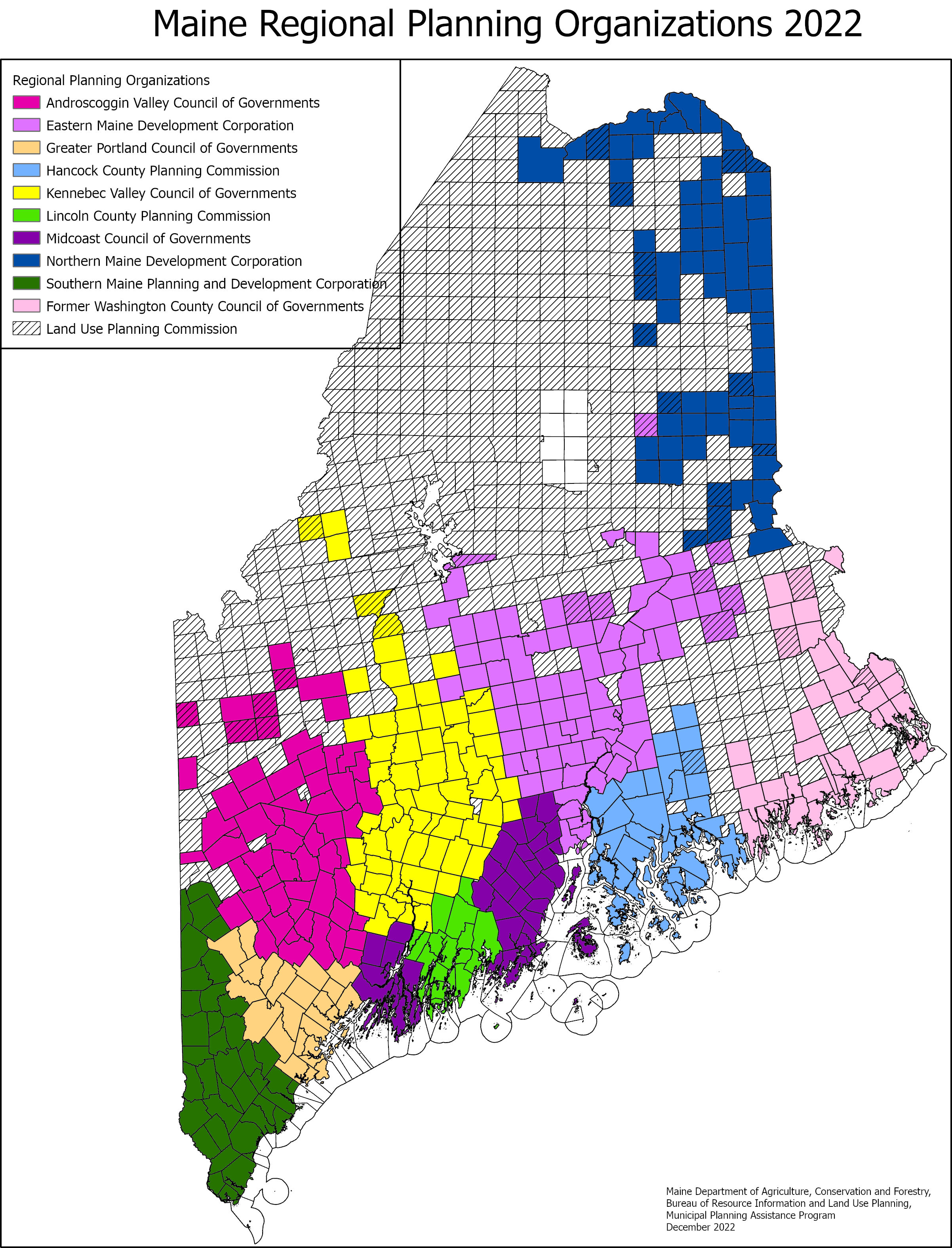
Yes. The Maine Recovery Council (Council) was created by state law to direct spending from the 50% share held in the Maine Recovery Fund and ensure spending complies with the terms of Maine’s MOUs.[1] The Council is additionally responsible for facilitating collaboration across the state, local governments, Regional Councils,[2] and other key stakeholders,[3] in addition to developing a “centralized public dashboard” to publish the Recovery Fund’s expenditures.[4]
The Council is required to meet at least twice each calendar year, either in person or remotely,[5] but in practice has met monthly.[6] The Council is also required to host at least one meeting each year to provide “a public forum through which the Council can receive input from stakeholders and the public.”[7] The Council’s regular meetings are open to the public,[8] and details on past and upcoming meetings can be found here.
Decisions are made by consensus.[9] The Council’s standing subcommittees include an Executive Committee, Finance Committee, Governance Committee, and the Programs, Needs, Grants, Planning, and Collaboration Committee,[10] as well as an ad hoc Prevention Workgroup.[11] The Council is empowered to create additional subcommittees “as it deems appropriate.”[12]
Unclear. The Maine Attorney General is required by the state’s settlement MOU to appoint an individual or family member “impacted by the Opioid Crisis,” as well as an individual with “substance use disorder and recovery community experience.”[13] There is no further elaboration on how “impacted by” and “experience” are understood or defined.
The Maine Recovery Council includes fifteen (15) members, eleven (11) of whom are required by Maine’s MOUs and the remainder (4) by state law:
Four (4) members selected by litigating cities and/or counties (“subdivision members”)[14]
Four (4) “state members”:
Two (2) members appointed by the Governor[15]
Speaker of the House or their designee[16]
Members of the Council may serve no more than two (2) consecutive two-year terms (i.e., no more than four (4) consecutive years).[26] Current Maine Recovery Council members are listed .
No (up to each locality). Local governments in Maine are not required to establish opioid settlement advisory bodies, but they may choose to do so. For example, Franklin County formed an Opioid Settlement Advisory Committee to develop a grantmaking process and recommend expenditures to county commissioners.[27]
Not applicable.
Me. Rev. Stat. tit. 5, Sec. 203-C(2). See Amendment to Maine State-Subdivision Memorandum of Understanding and Agreement Regarding Use of Settlement Funds (“2022 Maine Settlement MOU”), Sec. (“Duties”); Maine State-Subdivision Memorandum of Understanding and Agreement Regarding Use of Settlement Funds-2023 (“2023 Maine Settlement MOU”), Sec. (“Duties”). ↑
“Regional Councils” are not specific to the opioid settlements in Maine. Rather, they operate as that support planning and coordination across a range of issue areas. ↑
2022 Maine Settlement MOU, Sec. (“Collaboration”); 2023 Maine Settlement MOU, Sec. (“Collaboration”). ↑
President of the Senate or their designee[17]
Three (3) “public members” appointed by the Attorney General
“An individual or family member “impacted by the Opioid Crisis”[18]
An individual with “substance use disorder and recovery community experience”[19]
Public health expert in treatment and/or prevention[20]
Four (4) additional members appointed by legislative leaders:[21]
Medical professional “with direct experience providing medication-assisted treatment” appointed by the President of the Senate[22]
Member “representing reentry services for incarcerated and formerly incarcerated individuals and their families” appointed by the President of the Senate[23]
Member “representing a nonprofit community-based provider of mental health treatment” appointed by the Speaker of the House[24]
Member “representing the harm reduction community” appointed by the Speaker of the House[25]
2022 Maine Settlement MOU, Sec. III (“Transparency”); 2023 Maine Settlement MOU, Sec. III (“Transparency”). See generally Emily Bader. Maine attorney general announces resource center to aid local opioid settlement spending. The Maine Monitor. July 3, 2024. Accessed September 1, 2024 (reporting on Maine AG’s forthcoming “resource center,” which “will help the subdivisions conduct comprehensive needs assessments, plan evidence-based programs, develop measurable objectives for their spending,” in addition to creating “publicly available ‘community profiles’ and a data dashboard”) (emphasis added). ↑
See Maine Recovery Council Calendar. Office of the Main Attorney General website. Accessed September 1, 2024. ↑
Bylaws of the Maine Recovery Council, Sec. 4.2 (January 31, 2024). ↑
Bylaws of the Maine Recovery Council, Sec. 4.2 (January 31, 2024). ↑
Bylaws of the Maine Recovery Council, Secs. 6.1-6.6. See also Maine Recovery Council Members. Office of the Maine Attorney General website. Accessed September 1, 2024 (details on members of each committee). ↑
See, e.g., Prevention Workgroup agendas included alongside some but not all the Council’s meetings here. ↑
Bylaws of the Maine Recovery Council, Sec. 6.1 (January 31, 2024). ↑
Me. Rev. Stat. tit. 5, Sec. 203-C(3)(A). ↑
Me. Rev. Stat. tit. 5, Sec. 203-C(3)(B). ↑
Me. Rev. Stat. tit. 5, Sec. 203-C(3)(C). ↑
Me. Rev. Stat. tit. 5, Sec. 203-C(3)(D). ↑
Opioid Settlement Advisory Committee Bylaws -Draft 2024. Franklin County, Maine. Accessed September 1, 2024. See also Opioid Settlement Funds; Franklin County, Maine website. Accessed September 1, 2024; Emily Bader. Franklin County hopes to start distributing opioid settlement money by the end of the year. The Maine Monitor. September 25, 2023. Accessed September 1, 2024. ↑